

The Coffee Chat (#112)
My conversation with Jamaal Glenn: Founder & CEO of JG Holdings, Adjunct professor at New York University and the City University of New York and Dad to 2!

Welcome to the new subscribers who have joined us since the last post. Today this email is going out to 2,133 amazing individuals!
If you’re reading this but haven’t subscribed, you may want to consider doing that. This will ensure future posts land straight in your inbox.
🎧 Did you know you can also listen to Decks and Diapers on your favorite podcast app?
Hi there 👋🏽
Back when I was playing competitive tennis, my coach told me we needed to rebuild my entire service action - the one I’d spent six years perfecting.
It was muscle memory. It was mine.
I was confused. And then I was furious.
He said: “What got you here won’t get you there. Your serve is good. We need it to be great. And right now, you’re one match away from tearing your shoulder.”
For months I felt like a beginner. Awkward. Slower. Worse by almost every visible measure. And then one day.... I wasn’t.
Suddenly I had angles I couldn’t have dreamed of before. Less strain on my shoulder. A serve I could actually build a game around, not just survive on.
That experience taught a very important thing I know about learning: sometimes, forward looks like backward first. You have to make yourself worse before you can become better.
I’ve thought about that moment often, especially in the parts of my career that required me to genuinely start over. From the outside my career has not looked linear and logical. It was a series of deliberate moves that compounded slowly, then suddenly.
What I have also realized is that, when you are an adult, the hardest thing about unlearning isn’t the skill gap. It’s the ego gap.
Most of us are willing to learn new things. Very few of us are willing to be bad at something ... in front of people who are watching.
Unlearning is a skill. Arguably the one that matters most right now - when everything around us is changing faster than our muscle memory can keep up.
☕ Now, on to today’s coffee chat…

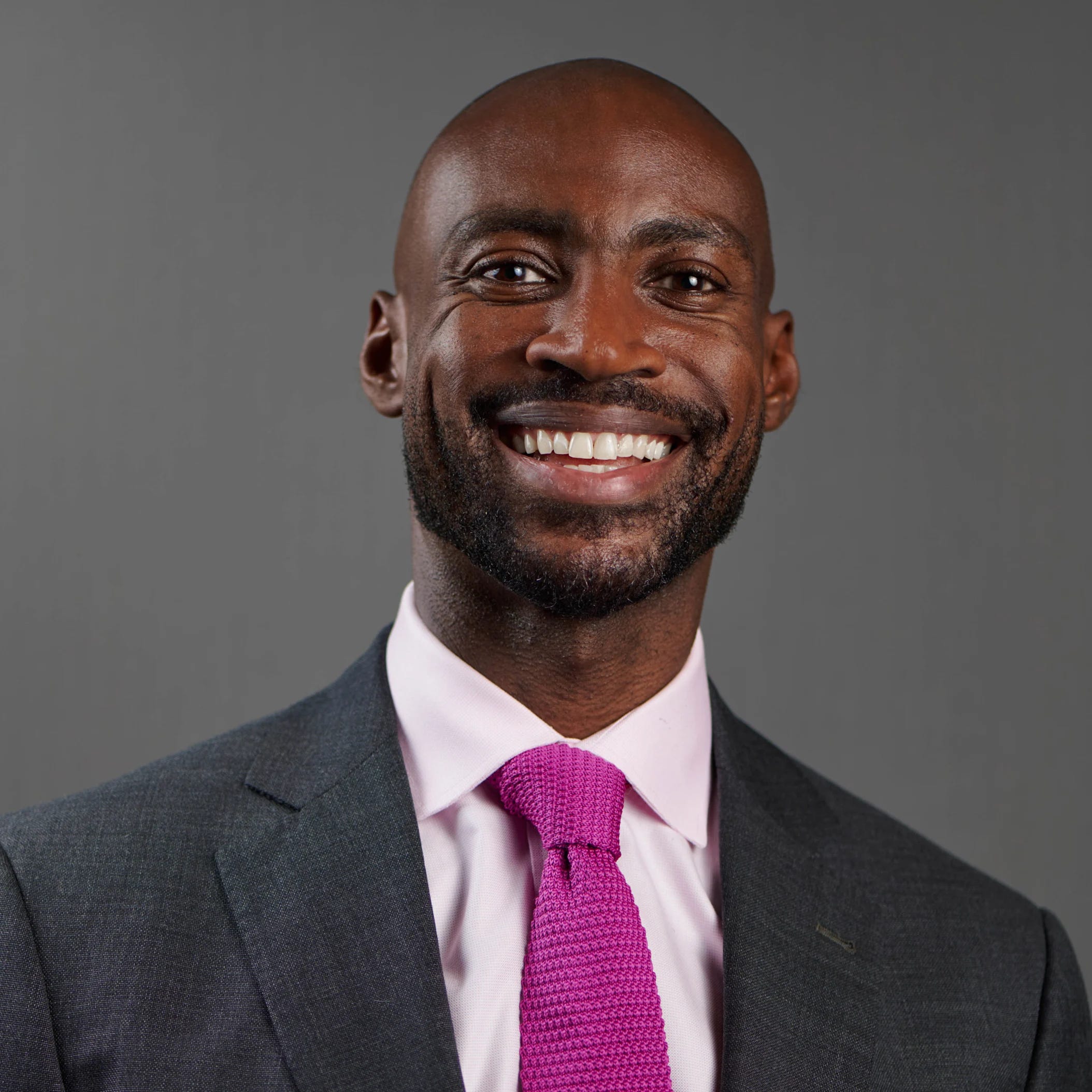
Meet Jamaal Glenn
Jamaal is an entrepreneur, venture capital investor, educator, writer, speaker, and consultant working at the intersection of business, media, and public impact. He is the Founder and CEO of JG Holdings, an investment and advisory firm focused on building and supporting long-term value creation.
He is also an adjunct professor at New York University (NYU) and the City University of New York (CUNY), where he teaches graduate and executive courses in finance, marketing, and entrepreneurship. In addition, he founded Glenn Media Group, a boutique consulting firm whose clients have included Google, Harvard University, and the City of New York.
Beyond his business and academic work, Jamaal serves as Chair of The Pivot Fund, a venture philanthropy fund supporting community-led news organizations, and as a Board Director and Treasurer at LION Publishers, the largest membership organization for independent news publishers in the U.S.
Jamaal holds an MBA from Stanford Graduate School of Business, an MPA from Harvard Kennedy School, and undergraduate degrees in finance and journalism from the University of Missouri.
Below is my conversation with Jamaal…
Please tell us a little bit about yourself
I’m Jamal Glenn. I’m just new to parenthood. I’m the father of boy-girl twins that we welcomed in the winter of 2024, and I live just outside of Washington, DC, with my wife and two children.
I’m originally from Colorado, born and raised, and I’ve lived in a bunch of different places, all in the United States. I went to undergrad in the Midwest, then moved to New York City and spent some time working in finance. I lived in New York City for many years, left for a bit to go to grad school, came back, and then moved to DC about two years ago. My wife is from the DC area, Southern Maryland, and we had this long-standing plan to eventually move there.
I’ve spent most of my career working at the intersection of finance and technology, and New York is a natural place to do that sort of work. When we had this plan to move to DC, I always felt like DC is a bit of a one-company town… you either work for the government or adjacent to it, and if that’s not your focus, it’s kind of like, “Well, what are you going to do here?” I never wanted to force a move to Washington DC. But the pandemic changed how I thought about the relationship between geography and work. As the pandemic shifted universal norms around remote work, I never again wanted a job that imposed geographic constraints. So we’re super happy in DC, we’ve been here a couple of years, and we are as happy as possible, just overwhelmed with gratitude, and learning what it means to be a parent day by day.
Wonderful. The way I first came across your work was actually through a piece you wrote about fatherhood, identity, and the long road to becoming a parent. You wrote about it with a lot of honesty, which is why I wanted to ask you about it more directly.
You’ve shared that it took you and your partner about six years - through IVF cycles, miscarriages, conversations around surrogacy and adoption, and all the uncertainty that comes with that kind of longing for a child.
One thing I think we still don’t hear enough about is the male perspective in that journey. Understandably, much of the conversation centers on women because the physical burden of fertility treatment and pregnancy loss is carried so viscerally in the female body. But emotionally, it reshapes both people.
So I’d love to understand what that period was like for you not just as a partner trying to support your wife, but as a man navigating hope, grief, helplessness, identity, and expectation over such a long stretch of time. How did that experience shape your relationship, and how did it shape you personally?
As the man in this situation, I always recognize my experience is about one millionth of whatever my wife was going through at any point in time. The reason I talk about it so much is that it takes up so much mental capacity - it’s almost impossible not to talk about. You go to work every day, you do all these professional things, you interact with people in a professional capacity, but you’ve got this lingering thing in the back of your mind that is core to who you are as a person. If you want to be a parent, if you aspire to be a parent, it’s such an ingrained desire that having these fundamental challenges exist makes it very hard not to think about them constantly. And for me, it became very difficult not to talk about them.
Throughout a lot of our journey, I was to varying degrees open about it. That came from two things. One, as I mentioned, it took up so much mental capacity. And two, I so often felt relief and comfort when other people shared their own experiences. I remember simply reading - I believe it was Michelle Obama’s biography - where she shares that she and Barack Obama went through IVF. And I remember feeling like, “Oh.” Hearing that from other people just made it feel less isolating. I also had interactions with people who’d say, “Oh, we had a miscarriage,” and those kinds of anecdotes provided so much comfort. One: I wasn’t alone. Two: they were often accompanied by some piece of advice. The advice that served me most was reframing the disappointment as just a delay … this is just going to take longer. And people would share their own stories: “Hey, we went through a ten-year journey.” Those kinds of anecdotes really made me feel better.
So it was a combination of: this is such a dominant part of my life right now that it feels inauthentic not to talk about it, and I felt a lot of comfort when people shared with me. But I always recognize that my experience was so different and so much less arduous than my wife’s.
So my goal was really just to be there to support her, make sure we had the resources to pursue this journey, and we were very fortunate to have the financial resources to do so, because this all costs a lot of money, and to let her know: I’m here, we can do this for as long as you want, you’re in the driver’s seat. She should never have to add to her list of worries: does Jamal want to stop, or pursue alternatives? So it was really about providing support and resources and letting her know to keep going for as long as she wants.
I really appreciate how openly you talk about this, because I do think it helps normalize an experience that so many couples quietly carry. A lot of the emotional support understandably gets directed toward women, because they bear so much of the physical toll, but when men deeply want to become fathers, they experience grief, disappointment, and uncertainty too and often without the same language or support systems to process it.
I have male friends who’ve been on fertility journeys for years, and I can see how deeply it affects them, but many don’t really know where to put those emotions or who to talk to about them. So I think there’s something really powerful in you speaking about it publicly.
And it makes me curious about the desire itself. Where do you think your longing to become a father came from? Was it something that was always deeply present in you? Did it come from your own upbringing or role models you had growing up? Or did the intensity of the desire grow over time, especially through the difficulty of trying to get there?
I don’t know that I can pinpoint an exact place or time where it comes from. I’ve always just seen myself as someone who would eventually have children. I will say my relationship with fatherhood is a little complicated, because my father died of non-Hodgkin’s lymphoma when I was ten years old. That was such a profound experience that I think shaped me in probably some good ways and some not-so-good ways - in terms of how I show up emotionally, how emotionally available I am. There are some complications there I can’t fully articulate. But I always just saw myself as someone who would have children.
Now that I do have them, it almost feels like … oh, this is what the whole point of this is. This is the whole reason we live. It’s almost as if, if you strip away all the complexities of modern society, we are just a species of living things trying to continue to grow and thrive. And having children feels so core to that project, to the overall goal of life, that I can’t imagine an alternative where I wouldn’t have had them.
Obviously I can imagine an alternative where we weren’t able to have our own biological children but it feels so core to being human that I almost can’t conceive of it. I feel this very differently now, having them. Before, I wanted children but it didn’t feel this ingrained, this core. Now it almost feels like I can’t imagine not pursuing this path.
Growing up, I used to think about legacy in this big, abstract way …what impact will I leave behind, what will matter after I’m gone. And even in spaces like grad school or ambitious career environments, you’re constantly pushed to think about purpose in these grand terms.
But then you have children, and suddenly legacy becomes much more intimate and tangible. You realize: this is actually what outlives me. The values I pass on, the way my children move through the world, the small parts of myself that continue through them that’s the closest thing most of us will ever have to immortality.
It’s funny because we live in a moment where some people, especially in Silicon Valley, are literally trying to engineer immortality. But I sometimes think this version is how humans have always done it: through values, stories, relationships, family. A little bit of you carries forward through your children and grandchildren, and eventually even that memory fades and maybe that’s okay. Maybe that is the natural shape of legacy.
You also said something before we hit record: that fatherhood didn’t just change how you saw yourself, it changed how the world saw you. I think a lot of people understand the first part becoming a parent is deeply transformative internally. But I’m especially curious about the second part.
What changed in how people responded to you after you became a dad?
As a tall, physically imposing Black man in American society, I got used to this pervasive feeling of invisibility or sort of being avoided. The joke I’ve made for years is that one of the few “Black male privileges” in America is that the seat next to you on an Amtrak train is probably going to be open. I say that as a joke, but when I first started making it, it was my own anecdotal observation and then I heard other Black men independently make the exact same observation. I actually stumbled across an internet video the other day where someone was literally filming people getting on the train saying, “Yeah, I’m a Black man, I’m gonna have a seat next to me.” So that’s a pervasive feeling that took me a long time to fully realize and articulate.
But once I had the children, I realized that perception had shifted so dramatically. It went from: walking on a crowded street and being either sort of ignored, or sensing people crossing to the other side, or noticing these subtle things - again, I can’t read people’s minds, but there’s enough of a sample size that these patterns become clear to now having a double stroller with two children. And I realize there’s a universality to this: children just burst open people’s humanity. You see a baby, people smile. You see a stroller, people want to engage. But for me, the contrast was so startling… from that pervasive feeling of invisibility to suddenly being in a world where people are stopping me, engaging, elderly women are having full-blown unprompted conversations. That was such a stark contrast, and it was an immediate thing I noticed especially when I started taking the kids out in public.
And I think, in my discussions with others, people do feel that sense of engagement when they have children - people want to talk to you. But I think the big difference for me was how stark the contrast was, because I had felt such pervasive invisibility in public spaces for so long. It was almost as if my children softened how I was perceived externally and allowed people to engage with me, get to know me, recognize me in a way I simply wasn’t used to, at scale.
That’s wild to me, because I would always assume that any big, tall guy who commands presence would just never feel invisible. Honestly, had you not told me, I never would have assumed that was your experience in public spaces. I would always have assumed you were just used to people making way for you, commanding that space. I never would have thought you’d describe yourself as someone who feels invisible.
But I do understand some of where it comes from. And it’s just interesting .. the layers of biases and assumptions people make about us just based on what they can visibly see.
And I will say … I don’t know that the realization came to me fully on my own. One of the key moments that helped me understand it was in grad school. I went to business school at Stanford. Stanford Business School has this very famous class colloquially known as “touchy feely,” though it’s actually called Interpersonal Dynamics. You spend hours every week having very human conversations with your classmates, unpacking the feelings and perceptions behind them.
I remember having a conversation with one of my classmates outside of class … technically you’re not supposed to, but it happened naturally while we were grabbing drinks. He said something to the effect of: “You’re a tall, physically imposing guy. My perception, and I think the perception of a lot of classmates, is that if you’re not the one to go out of your way to build the relationship, people are going to kind of stand back.” That conversation, combined with others and my own perceptions, really crystallized it for me. But yeah, that contrast - from the world I’d been living in, to the parent world where people come up to you and start conversations and really engage …is so stark.
You went to Stanford and have built a really interesting career, and I imagine you’ve spent time in environments where success is defined quite narrowly: titles, funding rounds, prestige, constant upward mobility.
So I’m curious how your relationship with ambition has evolved over time especially after becoming a dad. Did fatherhood shift that lens for you at all?
I will say and I think this predates graduate school for a long chunk of my career, I’ve viewed professional success and ambition by taking into account: what does this provide for the world?
I’ve done a bunch of pretty cool things since graduating, and I’ve spent a significant part of my career as an early-stage venture capital investor. I was an impact investor, so the things I invested in needed to be inherently good for the world. You can define that in a lot of different ways, and it’s a challenging thing to claim, because every entrepreneur feels like what they’re building is good for the world. But my definition goes beyond just economic success for the entity itself. I always say: I would be a lot wealthier if I had a tolerance for investing in enterprise software, for example. And there’s absolutely nothing wrong with enterprise software … companies have done great things. But for me, it doesn’t check the box. The world isn’t inherently better because some large corporation can do a particular process 10% faster, even if that creates enormous economic value.
So I always needed to do things that had some inherent good for the world it was just how I was wired. So much of my success in any particular job or field depends on: am I interested in this? And the pool of things that genuinely interest me is largely defined by whether they’re good for the world.
That has actually made it harder to pursue certain career paths, because there are things that were great in many ways financially, in terms of the opportunities they led to but I just couldn’t get excited about them.
So I don’t think parenthood has fundamentally changed that. If anything, I feel more deeply about it the further along I am in my career. I also find that I increasingly live in a world where more and more people think this way - a lot of the organizations I advise, family offices and philanthropy, are at this same nexus: we want to put money to work in the world, but we want to do it in ways that make the world better.
I will say that one thing that predated having children, but that I think about much more strongly post-children, is that I increasingly define personal success by my ability to control my time.
That really crystallized for me during the pandemic. One of the interesting things about remote work is that it fundamentally changes the arrangement you have with an employer from “you come and work for us for eight hours a day and we give you money” to “you produce XYZ.” It disentangles money from time and rearranges it to money for output, which I think is a more rational economic arrangement and genuinely better for workers.
But beyond the macro argument … it’s just personally fulfilling. Literally just yesterday, or the day before: I was working from home, we have a nanny, and I could hear my daughter wailing in the other room. I just peeked in and grabbed her .. she needed a bottle before her nap. I put her in her sleep sack, brought the milk into my office, turned my camera off during the meeting, listened while holding her as she drank. It was maybe five minutes. The nanny finished up with my son and came and got her. But those five minutes were so important. I’m never that far from my children, and there are these constant touchpoints throughout the day. I would genuinely trade a lot of the money I make each year for that ability.
So that thinking - that success means controlling my time and my location - predated my children, but that feeling has only gotten stronger since having them. My wife and I were literally having a conversation the other day about how much money it would take for us to relocate to some arbitrary location, regardless of what opportunities were involved. That ability to control my time and location is very valuable and an increasingly central part of what I consider success.
And I think one of the most frustrating things right now is watching organizations roll back flexibility through blanket return-to-office 5 days a week mandates.
To me, those decisions are going to disproportionately impact women and working parents. We can’t keep talking about declining fertility and female workforce participation while simultaneously removing one of the few structural changes that actually helped many families make work and caregiving more sustainable.
You mentioned earlier that flexibility is a privilege often reserved for people with enough leverage or in-demand skills to negotiate it.
I think the pandemic opened a door that’s impossible to fully close now. It showed people and companies that remote and flexible work can actually work.
And because of that, we’re in the early stages of a much bigger rethinking of work, geography, and how people want to structure their lives. The people with the most leverage and optionality increasingly want flexibility, and over time, employers are going to have to adapt to that reality.
Especially in industries where people are the core asset - professional services, technology, knowledge work - companies can only push so hard before it starts affecting their ability to attract and retain top talent. In the long run, if you’re competing in a real talent market, flexibility becomes less of a perk and more of a necessity.
And that flexibility helps with energy that you can give to all aspects of your life.
I’m curious whether going through such a long and difficult fertility journey changed the way you experience parenthood now.
A lot of parents talk about the stress and exhaustion that comes with raising kids - but when you’ve spent years wondering whether it would even happen for you, does that shift your perspective on the harder moments? Does the gratitude change the way you experience day-to-day parenting?
Yes - our long fertility journey dramatically changed the ratio of gratitude to frustration I experience as a parent.
Of course parenting is exhausting and stressful at times… that’s true for everyone. But because my wife and I spent years not knowing whether this would ever happen for us, there’s this underlying sense of gratitude that never really leaves.
It almost acts like a frustration circuit breaker. Whenever things start to feel overwhelming, there’s a moment where one of us remembers: we once thought we might never get to experience this at all.
My wife and I even joke about it sometimes. There’s that meme from Transformers where Shia LaBeouf is yelling, “You wanted this!” Whenever parenting gets hard, we’ll say that to each other as a reminder: you wanted this. We chose this, hoped for this, fought for this.
There was a point where we were seriously considering adoption because we didn’t know if having biological children was going to happen. So I think living through that uncertainty permanently shifted our perspective.
The joy-to-frustration ratio just feels incredibly high for us, because we can so clearly imagine the alternative scenario the one where we never got here at all.
I’m glad you brought that up, because that’s the other thing I tell people - Parenting is tough but then anything worth doing in life is tough. I wish more people talked about the joy and the fun and the pleasure of parenthood.
Over the years, I do think the narrative around being miserable and it being soul-sucking and just grunt work has become so overblown that it unfortunately scares a lot of people off. A lot of people rationalize it by saying, “Why would I want that in my life?”
I couldn’t agree more. There is so much joy and meaning and it’s just kind of cool to watch little human beings develop. My wife is a scientist, she has a PhD in microbiology and immunology, so I think I’m probably a little biased, but if you’re at all scientifically curious about human beings, having children is fascinating.
You get to watch them go from newborns to actual people. And I oftentimes find myself projecting into the future, thinking big picture about society: what kind of people will they be? How will they contribute? And whether I like it or not, the things I’m doing right now are dramatically influencing that
And you’ve got a natural A/B test built right in, since you have twins! You get to see nature versus nurture - the personalities of two kids at the exact same age being different. And then there’s also the difference in gender, which I think is so cool, because it couldn’t be more scientific in terms of watching how humans develop.
I’m really excited for you and your wife to experience watching these two grow up.
🤓 Open tabs…
(I have modeled this section after those “open tabs” that we all have with a few (okay 30-40) interesting links that we promise we will eventually get to one day. These are the links that I had open for sometime that I finally got to …)
⭐Are you an actual book nerd, or are you just ‘performative reading’?
“Especially on TikTok and in Instagram Reels, we can see that the algorithm basically rewards what looks good, like the eye-catching cover and the staged coffee shots in a downtown cafe,” said Muong, 17. “They’re focusing on what looks good and not whether the book is being read or not. And I think, because of this, platforms turn books into basically aesthetic props to curate in their Instagram dumps.”
⭐The Taylor Swift Songwriting Process Interview
The New York Times Magazine polled more than 250 music insiders and gathered six Times critics to choose the 30 Greatest Living American Songwriters. One artist who made the list was Taylor Swift.
⭐Why I Finally Called It Quits With LinkedIn
LinkedIn has become a feed where we perform “professionalism.”
It’s a middle-school cafeteria for people in suits, parody accounts built by trolls, and the highest level AI slop disguised as insight. I’ve heard that other platforms are like this too. That social media as we know it is done for…You aren’t “checking” LinkedIn; you’re monitoring your status. You’re waiting for the next hit of validation or the next spark of conflict. And while you’re monitoring that screen, you’re missing the real life happening three feet away from you.
📖 My private thoughts from my very public diary…
(Sometimes on X (Twitter)…. sometimes on Threads)

📋 A quick reader request
Shine, an early-stage health technology company, is building a wearable that continuously monitors hormones through sweat - beginning with cortisol and designed specifically for women navigating perimenopause and post-menopause.
As the team prepares for Alpha testing, they are hoping to hear directly from women aged 40+ about their experiences with menopause and hormonal health. If this applies to you (or someone you know), they would deeply appreciate you taking a few minutes to complete this confidential survey. It takes approximately 5–7 minutes.
If you enjoy Decks and Diapers, it would mean the world to me if you invited friends to subscribe and read with us. If that feels like too much then, did you know that liking this post or leaving a comment helps it find more readers?
P.S. If this email landed in your Promotions tab, please take a second and drag it to your Primary tab. It makes a big difference to the inbox gods, plus you’ll never miss a post!
Disclaimer: All views expressed are my own and do not necessarily reflect the views of my employer