
The Coffee Chat (#99)
My conversation with Simmer Singh: Founder, Glintt Consulting; Former HR Leader at VMware, Pinterest, Vodafone and Mom to 2!

Welcome to the new subscribers who have joined us since the last post. Today this email is going out to 2,004 amazing individuals!
If you’re reading this but haven’t subscribed, you may want to consider doing that. This will ensure future posts land straight in your inbox.
Hi there 👋🏽
I’ve been shopping online again, something I’d completely stopped doing after the COVID lockdowns.
It reminded me how consumption is closely tied to limits.
Not long ago, limits were physical.
You could only carry what fit in your hands, your bag, your mode of transportation. You made choices carefully... what to buy, what to leave behind, what mattered.
Even the shopping cart was once a technological innovation meant to expand those limits.
In the late 1930s, Sylvan Goldman, an Oklahoma supermarket owner, noticed shoppers stopped buying once their baskets got too heavy. So he put a basket on wheels and instantly expanded how much people could consume!
Fast forward to today, the cart has no wheels, no handles, no end.
It’s a bottomless feed in an app. A never ending wishlist.
We consume endlessly because the limits that once forced discernment are gone.
☕ Now, on to today’s coffee chat…

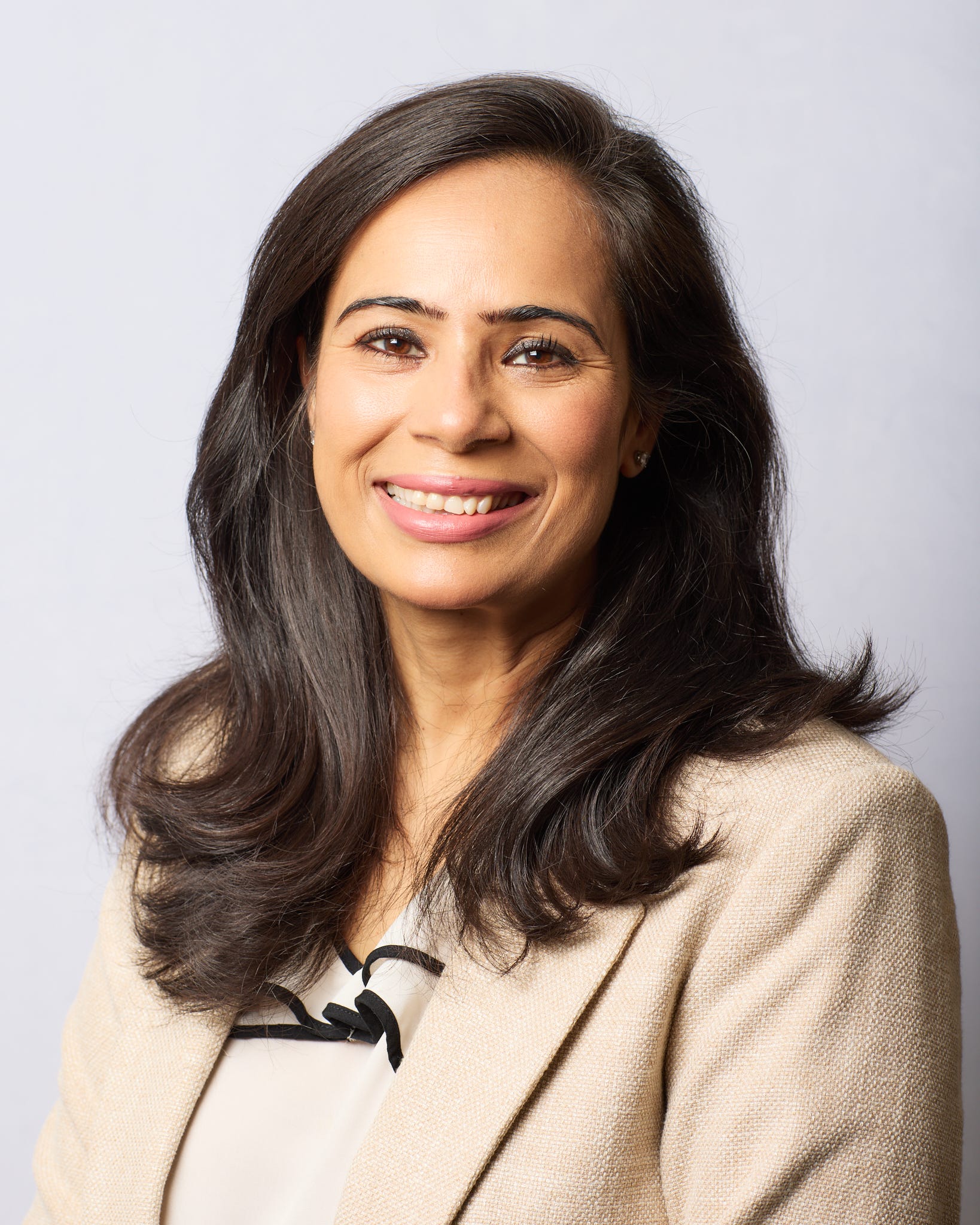
Meet Simmer Singh
Simmer is an accomplished global HR leader whose two decades of international experience span Fortune 500 organizations including VMware, Pinterest, and Vodafone. Throughout her career, she has bridged cultural divides across continents, leading large-scale transformation efforts and supporting thousands of employees across Asia, Africa, Europe, Australia, North America, and South America.
Her work centers on leveraging cultural intelligence to solve complex organizational challenges, helping multinational teams unlock the strengths of diverse perspectives and fostering collaboration between Eastern and Western business paradigms.
After a successful corporate tenure, Simmer founded Glintt Consulting, where she designs experiential, cross-cultural solutions that spark lasting behavioral change and healthier workplace cultures. Her approach integrates insights from both Eastern philosophies of community and harmony with Western models of innovation and individual empowerment.
Her personal journey, immigrating from India to the US and building a career while raising her daughter, has been instrumental in developing her deep cultural fluency. This lived experience of East-West integration fuels her commitment to supporting diverse global talent, which she extends through pro-bono executive and leadership coaching with the Humanitarian Coaching Network.
Below is my conversation with Simmer…
Please tell us a little bit about yourself
I grew up in India, in a small town outside of Delhi. I always say I’ve had a very linear career in HR. Somehow I just fell into HR. I started with L&D, training, and coaching, and then I kept trying new things.
I grew up in an environment where there were really only two options - You could be a doctor or you could be an engineer. I didn’t want to do either. Ideally I wanted to study the arts but back then it was considered something with no future. So I did commerce, and then I realized I’m not a numbers person but I loved psychology and the human side of things - how I fell into HR.
It’s been 20 years now being in this space. I’ve always worked with large organizations.
The shift from India to the US was really, really interesting - coming from a very collective culture to hyper-individualistic corporate America. I found mentors, learned a lot of cultural nuances, and then realized: I want to do this. I want to work on culture, and I also want to continue doing good work. Now I work directly with organizations as a consultant.
I have two daughters. They’re amazing. They keep me on my toes. They’re six and two. I love spending time with them, though, of course, there’s always this guilt of not being present enough. And I’m a very active person- I love being outdoors, working out, hiking etc.
I’m assuming your two-year-old was born in the US. Was your six-year-old also born there? Or did you immigrate with her?
No, both of them were born here. I actually moved because I married my husband, who was born and raised in the US. His parents were immigrants who came here as NYU students in the ’60s or ’70s, I believe. So yes - I moved, got married, and then had two girls here. It’s been a lot of fun raising kids.
You came here, adapted to a new life and new culture, and then had kids here. Your husband grew up here, but he’s of Indian descent, so there must be some cultural overlap - yet also differences in outlooks toward life, parenting, raising kids. I’m curious: what were some of the things you both agreed or disagreed on? How have you navigated that?
Your kids are getting such a unique upbringing - one parent who grew up fully in India, and one who grew up fully in the US. And I’m sure you also have cousins and friends in India raising kids. So I’m very curious if you notice big differences between that style of raising kids versus how we tend to do it in the West.
First of all, I have to tell you how grueling it was for me to raise kids here. They say “it takes a village,” and I always felt like - where is my village?
The way we raise kids in India is very different, just like you pointed out. One of the biggest differences I noticed between the West and the East is how protective we are of our kids. Also, a lot of our upbringing was done by parents who were in survival mode. That protection often became controlling - discipline-heavy - and that didn’t necessarily let kids blossom or become independent or be who they really are.
For us, it was like, “I told you so, just do it.” Academics were non-negotiable. If you got 90, you needed to get 95. If you got 95, you needed to get 100. And we didn’t explore the world outside academics - there was no space for interests or hobbies. I don’t think I got to explore any of that because there was so much focus on marks. My mom was a teacher, my dad ran a business guy - the focus for me was always academics.
Another big difference I see here is how we meet the kid where they are. In my house, we cannot raise our voices. We will spend hours negotiating with our kids. We try to understand each child’s temperament. My older one is very sensitive, so we explain things to her with high EQ. The younger one is more assertive, more risk-taking - her own personality.
I don’t think our parents had the time to understand individual personalities. It was just: “We told you, so keep your head down and do it.” So that’s a big difference I see, and I’m trying not to be controlling - trying to let them be their own people.
Hmm some of it could be cultural and some could just be generational!
The other thing I notice is a kind of cultural fluidity for people who’ve grown up or worked across different cultures. It’s a superpower, in a way - we have more in our toolkit than someone who’s only experienced one way of doing things.
But there’s also the flip side. When you move countries and corporate environments, there might be stereotypes or biases you get pulled into. How was that transition for you professionally? In India, you worked with some really big, leading organizations. And here in the US, you also worked with well-known companies.
I’d say there was a lot of learning. First, when I was applying for jobs - there were crickets. Nobody was responding. And I thought, “Okay, I’ve done 10+ years in corporate Asia, and I’ve done pretty well.” But there was a lot of, “Oh, you don’t have global experience,” even though I was managing clients and teams in the US.
The education or “living and working in the US” piece was a big barrier.
I also realized that in the US, you need a lot of networking and relationship-building. In India, we’re collective culturally, but in the job scene, it was mostly about experience and intellect. You just applied. There wasn’t this expectation of going around building connections.
So I made mentors and friends who kept saying, “Why don’t you talk to this person? Or that person?” That was a huge learning. Even now, in my own work, the biggest lesson has been how to network and build relationships. You help people; they help you. You get to know each other. You and I met through common connections and here we are doing this interview. Tomorrow, maybe we’ll do something else together.
The second big shift I struggled with was humility and hierarchy. Not challenging your boss. Keeping your head down. Not asking for much. Hoping someone would recognize you and pull you up from under the table and say, “Hey Simmer, you deserve that next step.”
One time, a colleague was upset in a meeting. I asked why. She said, “I created these two slides and my boss presented them without acknowledging me.”
This whole concept of self-advocacy - sharing your ideas, opinions, challenging people - was new. We come from a culture of harmony: “Don’t say anything that might hurt someone.” My team would say, “Simmer, you’re so good at giving credit to your team, always passing it along.” And I’d think, “Isn’t that what leaders are supposed to do?”
I always got complimented for that, but I had to consciously shift toward thinking about myself more….more individualism. I realized it when I finally told my boss that I was thinking about a promotion. She said, “Oh, I didn’t know you wanted one.” And I thought - aren’t you supposed to be thinking about me?
That makes so much sense. For me one of the biggest aha moments to do well in the west was this idea of advocating for yourself. That you’re an adult. And you shouldn’t assume someone is looking out for you. People are nice, but unless you ask for something, you’re not going to get it.
For me, one of my biggest learnings…luckily it happened during an internship…really shocked me. I thought I was doing very well because I was following instructions, doing a really good job. But towards the end, the big feedback was, “Hey, look, we hired you for this internship from what we think is the top school in the country, but we barely heard from you. And that to us was confusing - why are we hiring an MBA and paying that premium if they’re not going to question anything?”
To me, that was surprising because, similar to you, I had a great career in India. And a large part of that is: you agree with your boss, you’re told to do something, you do it really well, you give it to them, they present the slides, you get a pat on the back. And every few years your boss says, “I think you’re ready for the next promotion.” HR has processes, and you move through committees and get promoted.
So that was surprising - to realize there’s a different approach here. Which I think is nice, because there are people who stay in the same role for decades if that’s what works for their life. And it helped me realize that in India we’re very linear about growth. But here, some people genuinely say, “I like this. I don’t want more responsibility.” And that was shocking to me….people saying no to promotions.
But the other question I had - and I know you did a lot of culture change work, which ties to advocating for yourself is this: a lot of parents, especially women returning from maternity leave or with young kids, really struggle in organizations. As someone who has been on both sides…you’re a mother, and you’ve also worked in large organizations - what are some things you think women can do to advocate for themselves?
I feel like one thing women are taught is to be superhuman, right? The other day I was coaching someone whose boss had just come back from maternity leave. She wanted to be supportive, but she said her boss acts like nothing happened….like she had a kid but nothing changed. She doesn’t talk about the baby. And this woman said that actually makes her nervous about how to offer support.
I feel like you don’t have to go into every detail, but your life changes in so many ways when you have a child. Pretending that you’re going to work the same hours, at the same speed, and deliver at the same pace - it just puts a lot of pressure on yourself. And at least in Asian cultures, and many others, we don’t raise our hands to ask for help because we don’t want to appear weak. But it is a vulnerable time.
If during those 6–8 months you can get flexibility, I don’t think that compromises anything. We’re amazing at multitasking…we’re project planners for our homes. We run the show. We do everything. So all we really need is some understanding from the organization: I may not be responding to emails 24/7. I may not deliver things at supersonic speed. If something is urgent, can we align on expectations? Otherwise, I can work when the baby is sleeping, etc.
So I think having that understanding upfront and feeling comfortable asking for it is important. And bosses should also create that space and say, “Hey, you just came back. You have a newborn. Three months is not enough, we both know that. What’s going on? What do you need?”
And that looks different for everyone. Someone’s partner might be a stay-at-home dad. Someone else’s partner might travel constantly. So what do you need? How do we make this work?
I think people sometimes assume that if they give a woman some flexibility, they’re compromising the quality of work. But that’s not what it is. You still owe the work, and you still need a plan. You can absolutely say, “Hey, I can do these eight things, but I can’t do these two.” And that’s a conversation you owe your team.
And the same for the woman returning she needs to have that conversation. Not pretend that everything will go back to how it was. You had three months off, you have a tiny human now things are going to be different.
I really like that. Someone recently told me this too - the idea of “bouncing back” from maternity leave is false. You don’t bounce back to your old self; some things change, and you move forward.
And the flip side of what you’re saying, which I really like, is that as individuals, where things go wrong is when you forget that you still have to be outcome and impact-driven. Trust is earned. So you can say, “Here are 10 things. I can do six or seven really well. For the other four or five, let’s talk about timelines or flexibility.”
Even flexible hours like, “Can I log off at four and log back on at eight or nine?” For knowledge workers, asynchronous work is possible.
So I like this idea: ask for what you need, but with something solid behind it. Not just asking and asking. Because you’re right…that’s where bias creeps in. People start thinking, “Women with kids always do less.” And then they don’t want them on their teams. And that becomes a very damaging cycle.
At a certain level, we’re all responsible human beings. We know we’re running a business, and we owe our work to the organization but not at the cost of mentally or emotionally crashing. That’s the part that worries me.
Post-pandemic, there were definitely some good things. We all had this big wake-up call: What are we running toward? But I do feel like we’re forgetting those lessons now and slipping right back into the grind … not asking for help, not drawing boundaries, not prioritizing work–life balance or a healthy culture.
For sure. And I think that connects to something you said that you’ve taken the plunge and gone independent. That takes courage. Entrepreneurship is inspiring, but there’s also so much you have to do. You never really get a break. You’re constantly thinking about your business, and now you’re navigating that while raising two little girls.
So how do you manage your energy? How do you fuel your professional ambition while also doing right by your kids - whatever your definition of that looks like? Different women have different thresholds for what being a “good mom” means, so I don’t want to label it. But how are you navigating all of that while also essentially birthing a third baby ….your consulting firm?
You said it perfectly - the 24/7 part. You basically got inside my head! My husband says this too: there have to be windows where you switch off. But when you’re on your own, your brain is constantly running. There’s no end to what you could be doing.
My younger one just started daycare and I’m already like before I know it, she’ll be flying. She won’t need me like this forever. So I’m trying to be more present. Doing fun things. Yesterday we went biking. My older one is doing swimming and gymnastics. I used to drop her off and then hit the gym, but yesterday she asked, “Can you watch me?” So I said okay …I’ll watch half the class and then do a quick 20-minute workout.
Those small choices matter. Being where you are. As moms, our brain is always jumping ahead. I’m not perfect at this, but I’m trying.
I love that and it’s a good reminder for me too. I’m often in a moment but already thinking about the next thing, which means you never actually feel the moment. So yes - be fully present at work, fully present with your kid. Don’t mentally run ahead.
You have two girls…. have you thought about what you want them to take away from watching you navigate life? When they’re, say, 18 or 21, and becoming adult women, what do you hope they internalize about what it means to be a woman? A mom? An adult in the world? Because so much of our own ideas come from our mothers and how they showed up.
I really hope they don’t grow up thinking they’re supposed to do all the chores or shoulder the heavy lift. My husband and I try to model balance … if I cook, he cleans, he loads the dishwasher
Growing up, I saw many women put themselves last. I want something different for my girls. I want them to pursue careers they love, not just what’s expected, but what excites them. I want them to put themselves first sometimes and prioritize self-care.
And yes, there’s a generational shift, which is great, as long as it doesn’t swing to the extreme where they’re just chilling and not doing anything! But genuinely: I want them to be passionate about something, driven, trying to make a difference. That’s a big part of the work I do, and I hope they pick up pieces of it.
Confidence is another one. I read an article that said girls’ confidence drops dramatically after age eight … looks, societal pressure, all of it. And I’m raising brown girls in a country where many people don’t look like them. I want them to be confident in who they are, their values, their roots. I want them to come talk to us without fear. Not the way we grew up - “If I tell my mom, she’s going to explode.”
I always try to create a safe space: no matter what mistake you made, you can come talk to me.
Yes. My husband and I talk about this too. We weren’t difficult teenagers, but we did stupid things like every teenager. And our daughter will too. I just want her to know …. if she’s ever in trouble, we are the first people she calls. Yes, we’ll be disappointed, yes we’ll talk about consequences. But I don’t want fear or secrecy.
Even now, when she does small “forbidden” things - like sneaking candy before dinner - we tell her not to hide things from us. The previous generation in India was very fear-driven, especially with fathers. I want something different.
Switching gears… you also offer pro bono coaching through the Humanitarian Coaching Network. How did that come about? And has a conversation there ever changed you in some way? Because you’re clearly changing others but did someone shift your worldview in return?
I don’t know if “changed” is the right word, but I’ve had conversations that reinforced why I do this work.
Humanitarian Coaching Network does a lot for people of color and those who can’t afford coaching.
What I’ve seen is that many people grow up never being encouraged to ask for help. When I coach someone, they often don’t even know this kind of support exists. They think they’re supposed to figure out their entire lives alone.
Sometimes during reflections at the end of a coaching journey, someone will say, “I applied for that promotion only because you told me I’ve got this.” Something so simple — you’ve got this — can shift a person’s entire path.
There are so many people who tell you why you can’t do something. Very few tell you why you can. Coaching creates that space. Life is busy, even with great friends sometimes you don’t get that depth of support.
Any final parting thoughts?
First, we’re living in a global, hybrid world where leaders are often moving across continents, and organizations are more diverse than ever. I’m committed to supporting organizations, leadership who manage global teams as well as immigrants in navigating different perspectives with cultural agility. This is an ongoing journey, and I’m excited to be part of it - blending insights from both Eastern and Western experiences.
Second, for all my fellow women leaders and moms: Don’t be afraid to ask for what you need. Whether it’s a promotion, support from your partner, setting boundaries with family, or help from a friend, we often feel we have to figure it out ourselves and put ourselves last. But asking isn’t selfish - it’s necessary, and it allows us to show up fully in every part of our lives.
I love that. And I also know that my mom… again, moms are amazing….If nobody else reads the newsletter, I know she does. It’s the mission of my life now - to tell her to be a little bit more selfish. Like you said, she has given so much and always puts her own needs and desires last.
I’m like, “Mom, both your kids are well-settled. We’re fine. Just do something for yourself. It’s not selfish.” I keep telling her, “Just do things for yourself.” So hopefully this inspires a bunch of people to be a little more… I won’t say selfish, but to live for themselves. Women especially - we’re so selfless.
But if nobody gets inspired except my mother, that’s still a win. If she reads this and does something fun this weekend for herself…something entirely for herself and nobody else…that would make me so happy.
Quick-fire Questions:
What’s the best thing you have read recently?
The 12 Week Year. As an entrepreneur and as a mom, I need to brutally prioritize my life. The book talks about considering 12 weeks as your whole year. People make high sales in December not because it’s festive season, but because they put pressure on themselves and say, “This is it.”
What’s the best thing you have heard recently?
The Talent Development Hot Seat podcast! I think it is great and as a bonus for your readers both you and I have been featured in it
What’s the best thing you have watched recently?
Euphoria! There is definitely something in there for us to think about.
How we’re raising our kids in this digital world. I know the show exaggerates things, and there are a lot of pros and cons, but I do think for all parents we have to be mindful of what we want our kids to see, how we want them to be raised, what values we’re instilling, and how we’re engaging with them.
It’s very easy to give them an iPad and get more work done, but it’s also really scary if you leave them unregulated in the online world.
🤓 Open tabs…
(I have modeled this section after those “open tabs” that we all have with a few (okay 30-40) interesting links that we promise we will eventually get to one day. These are the links that I had open for sometime that I finally got to …)
⭐Coordinated online attack sought to suggest Taylor Swift promoted Nazi ideas, research finds
This demonstrates how a strategically seeded falsehood can convert into widespread authentic discourse, reshaping public perception even when most users do not believe the originating claim
⭐How does being born c-section affect a child’s long term health?
When babies are born vaginally, they pick up helpful bacteria from their mum as they pass through the birth canal. This helps seed their gut microbiome – the community of microbes that play a vital role in immunity and health.
C-sections skip this step, and a major Lancet review found C-section babies had a higher chance of having allergies, asthma, and a less diverse gut microbiome in early life. But most of the research was observational, showing links rather than clear cause and effect, and it’s uncertain whether these differences actually persist into later childhood.
⭐Pedophiles Using AI To Target Kids And No One Can Make It Stop
But we need to get our collective heads out of the sand. Because every time I talk about AI being an unregulated industry people get real angry. Not at AI companies. At me.
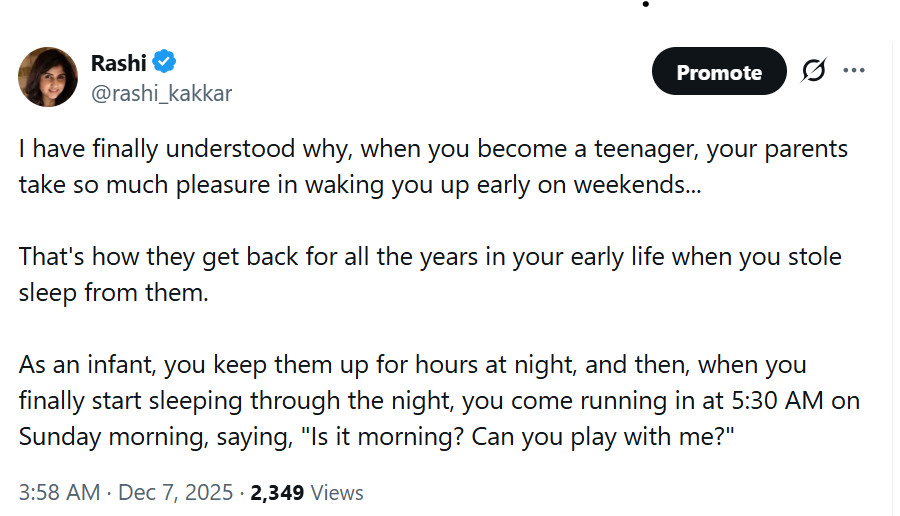
📖 My private thoughts from my very public diary…
(Sometimes on X (Twitter), sometimes on Threads and sometimes on BlueSky)
If you enjoy Decks and Diapers, it would mean the world to me if you invited friends to subscribe and read with us. If you refer friends, you will receive a little something from me as a thank you!
If that feels like too much then, did you know that liking this post or leaving a comment helps it find more readers?
P.S. If this email landed in your Promotions tab, please take a second and drag it to your Primary tab. It makes a big difference to the inbox gods, plus you’ll never miss a post!
Disclaimer: All views expressed are my own and do not necessarily reflect the views of my employer
Wow, the insight about the digital shopping cart having no limits really hit home. How much do you think AI recommendation engines accelerate that 'bottomless feed' phenomenon?
Great conversation. We just became parents and I am going to share some of these things with my wife who is going through a lot of this as she goes back to work.